It was with the utmost delight and pride last year that we celebrated the 100th anniversary of the founding of Republic that Mustafa Kemal Atatürk established with a vision that was far ahead of its time and is still valid today. As a corporate group that is almost as old as the Republic of Turkey itself, we have staunchly defended progressive Republican values for nearly a century and will continue to do so. Vehbi Koç, our group’s founder of beloved memory, once said “I exist only if my country exists; if democracy exists then we all exist.” Recognizing that dictum as one of our core corporate principles, we will continue to strive even harder in our efforts to spearhead our country’s economic and social development.
Most unfortunately, we began the new year with a dreadful catastrophe. In February, two massive earthquakes struck our country’s southeast and claimed the lives of tens of thousands of our citizens, the pain of whose loss is still fresh in our hearts. May God have mercy on their souls; to the grieving families. Responding immediately, the Koç Group as a whole mobilized and deployed its resources to aid the families. Next, we built four “Hope Town” container cities in Adıyaman, Hatay, İskenderun, Kahramanmaraş, and Malatya, each capable of accommodating five thousand people. We continue to support those living in stricken areas even as I write this.
THE GLOBAL ECONOMY PERFORMED BETTER THAN EXPECTED.
2023 is over but the repercussions of the year are not. The security risks posed by Russia’s war against Ukraine, where a dearth of meaningful efforts to bring about a reconciliation makes it unlikely that peace will be restored any time soon, have been exacerbated by the conflict in Gaza where a humanitarian crisis is unfolding. Today we are unfortunately witnessing what happens when the Palestinian question, which has been a festering source of tension in the region for decades, is treated by Western governments as if it did not exist.
Given that the global economy has been repeatedly hammered by a global pandemic, by war in Ukraine, by production and supply chain disruptions, and by soaring commodity, food, and energy prices since 2020, it performed rather better than could have been expected in 2023. The shock effects of the previous four years have receded and while most countries’ central banks are determined to rein in inflation by tightening money supplies and raising interest rates, such measures haven’t brought the global economy to a standstill as some feared they would.
Global inflation eased in 2023 after reaching a four-decade high in 2022. Global growth, which the IMF judges expanded by 3.1% last year, continued to differ significantly from region to region. The eurozone limped in with a mere 0.5% expansion for example while even with soaring interest rates, America’s economy likely grew by a much more robust 2.5%. The real engine, once more, was Asia. China may no longer contribute as mightily to global growth as it once did, but it still commands the high ground in numerous strategic technologies. Meanwhile India, Asia’s other titan, is muscling up fast, as it attracts foreign capital that expands both its production capacity and global market share.
DECISIVE CHANGES AT HOME SIGNALED A RETURN TO RATIONAL POLICYMAKING.
After the May parliamentary elections, Turkey’s new economic policymakers adopted a more rational approach. This led to decisive changes, particularly in the realm of monetary policy, alongside broader reforms. In June, our country’s central bank began a sharp upward trajectory in its policy rate, eventually reaching 42.5% by year’s end from an initial 8.5%. This tightening, alongside the unveiling of a medium-term plan seen as credible, offered some respite to jittery markets amidst stubbornly high inflation, which ultimately finished the year at 64.77%.
That said, a rapidly growing budget deficit and persistently high current account deficit are complicating the task of economic policymakers, who are grappling with the aftermath of devastating earthquakes. Despite a decline in energy and gold imports in 2023, the CAD remains stubbornly high due to insufficient export and service revenues. Economic policymakers are attempting to balance domestic demand without causing a sharp slowdown while simultaneously trying to reduce the CAD and keep the depreciation of the Turkish lira below the inflation rate. The national economy grew by 4.7% in the first nine months of the year, largely driven by domestic demand. However in view of last year’s efforts to restrain domestic demand, growth most likely slowed in Q4 2023 and will continue to do so into 2024.
TÜRKİYE’S AUTOMOTIVE MARKET BROKE NEW RECORDS LAST YEAR.
Driven by a year-on-year 9% increase overall and by an 18% surge in cars, the Turkish automotive industry rebounded to pre-pandemic levels in 2023 with total output reaching 1,468,393 units. Despite modest economic growth across the globe but especially in its primary European markets, the industry’s exports were also up by 13% YOY and weighed in at USD 36 billion in value. This performance made the sector the country’s export champion with a 15.8% share of total exports.
Powered by the 2023 recovery, the domestic automobile and light commercial vehicle market surged to record levels, posting a 57.4% YOY increase to reach 1,232,635 units. This growth was nourished by remarkably strong car sales (967,341 units, up 63.2%); however even LCV sales (265,294 units, up 39.2%) fared respectably well.
TOFAŞ DEFENDED ITS STRONG MARKET POSITION ACROSS ALL ITS BRANDS.
A key player in the Turkish automotive industry, Tofaş continued to perform strongly in 2023. Because of the company’s focus on improving its production and R&D capabilities, the Tofaş plant ranks among the Stellantis Group’s top-performing factories worldwide based on industrial metrics. Having completed its 55th year in operation, Tofaş passed a major milestone in 2023 when the 7 million vehicle rolled off its assembly line. The company also accounted for a significant 16% share (240,000 units) of the automotive industry’s total output and a 6% share (60,000 units) of its total automotive exports.
With its Fiat brand commanding a 16.2% share of Turkey’s passenger & light commercial vehicle market while also registering noteworthy growth in all of its brands, Tofaş defended its standing as the sector’s leader for the fifth year in a row. Face-lifted versions of the Fiat Egea, a completely home-grown automobile developed and manufactured by Tofaş, did us proud as the country’s most popular car for the eighth year in a row.
Two agreements that are of the utmost importance to Tofaş’s future were initialed last year. The first of these was a framework agreement between Koç Holding and the Stellantis Group that was concluded in March; the second was a share-acquisition agreement between Tofaş and Stellantis Turkey that was signed in July. The strategic collaborations embodied in these agreements are powerful affirmations of the great confidence that Koç Holding and Stellantis have both in Tofaş and in our country. We expect that all agreement-related formalities, including competition-authority approval, will be completed before the end of 2024.
WE’RE GEARING UP FOR THE FUTURE.
Leveraging its ability to manage rapidly-changing business dynamics, its sustainably-nurtured corporate competencies, its rational approach to investment, and its competitive strengths, Tofaş continues to advance confidently into the future while also proactively readying itself for that future through complementary digital-transformation, agile-management, and decarbonization initiatives.
The European Union’s 2050 carbon-neutrality goal, outlined in the European Green Deal, is hastening the automotive industry’s transformation. Tofaş conforms to both national and international climate policies while also maintaining its corporate commitment to carbon-neutral facilities. Tofaş prioritizes a management model that generates value through a holistic approach that is mindful of the social and environmental as well as of the economic aspects of its operations. Last year’s inclusion of Tofaş’s shares in the BIST Sustainability 25 Index of Turkey’s 25 most sustainability-focused publicly-traded firms is evidence of the company’s strong sustainability performance.
We will continue to contribute to a more prosperous world by undertaking projects that support social development within the overall framework of United Nations Sustainable Development Goals while also increasing our own shareholder value by consistently improving our environmental, social, and corporate governance performance and further strengthening our human resources which, because they are central to all of our operations, are our most valuable asset.
With these thoughts in mind, I extend my heartfelt gratitude to our employees and business partners as well as to all the other stakeholders who contributed to Tofaş’s exceptionally successful results last year.
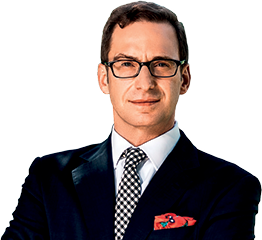
Ömer M. Koç
Chair of the Board of Directors