INNOVATION & DIGITALIZATION
287 projects were completed in 2023 and the number of projects carried out in the field of digitalization in the last 5 years exceeded 1,700. In 2023,
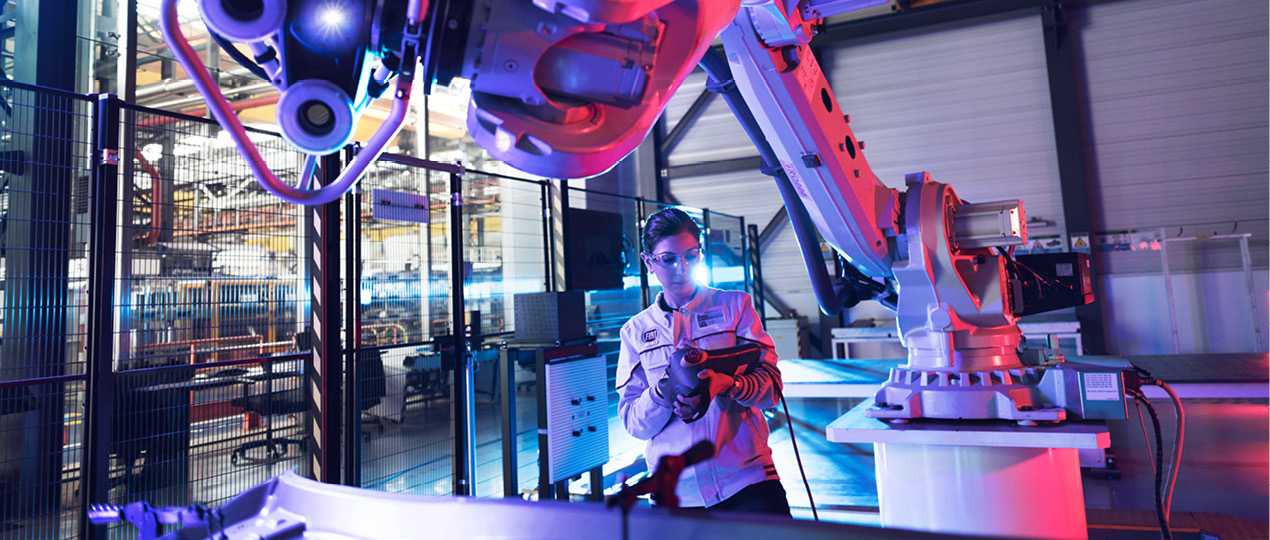
Tofaş shapes its strategic priorities and practices considering technology developments, changing market and customer requirements. The company prioritizes the usage of digital productivity tools to continually improve its competition and to move towards smart factory applications.
In this context, 287 projects were completed in 2023 and the number of projects carried out in the field of digitalization in the last 5 years exceeded 1,700. In 2023, mainly focused technologies were internet of things (IoT), advanced analytics, machine learning, vision technologies and collaborative robots (cobots).
- Much of the production machinery and equipment currently in use at Tofaş is already connected to an IoT platform that makes it possible for their critical parameters to be monitored in real time. The total number of projects that facilitate early problem-detection & intervention at Tofaş reached 871 in 2023 with the addition of 110 new ones during the year.
- During 2023, 98 work-process digitalization projects were carried out bringing the total number of such projects to 370. Besides facilitating workflows, these projects also create significant business value and saving from operational costs.
- During 2016-2023, the center worked on 79 projects making use of next-generation image-processing and artificial-vision technologies aimed at increasing accuracy and reliability in Tofaş’s critical quality control processes.
- Tofaş originally began using cobots to automate manufacturing-operation tasks that involve human-robot interactions. This initiative expanded in 2023 with 3 new collaborative robot projects launched in the press and body shops.
- During 2023, 29 new projects utilizing data science, artificial intelligence and machine learning technologies were launched at the factory, bringing the total number to 62. The data-driven prediction methods developed through the practical deployment of these projects have already led to significant improvements in workplace safety and efficiency.
Along with improving, the data infrastructure Tofaş also continues to invest in the development of information technologies such as wireless and mobile networks, cloud architectures, and cybersecurity as fundamental aspects of its overall digitalization process.
In order to expand employees’ data competencies and to support the proliferation of their data-focused analytical projects, big-data backbone accessibility has been increased so that they may tap its resources to develop analytical scenarios of their own into which they may incorporate data from both internal and external sources Self-service analytics products and “Low Code/No Code” tools incorporating rapid software development methods have been deployed on the same infrastructure. Investments capable of advancing the digital workplace and robotic process automation (RPA) of basic infrastructure and office tasks have been accelerated and are now at the point at which they are capable of supporting operational agility.
In the period ahead, Tofaş will continue to take a benefit-driven approach when dealing with digitalization projects. As it continues to move forwards on its digital transformation journey, the company will be actively prioritizing the incorporation of advances in technologies like generative AI and Chat GPT into its business processes.
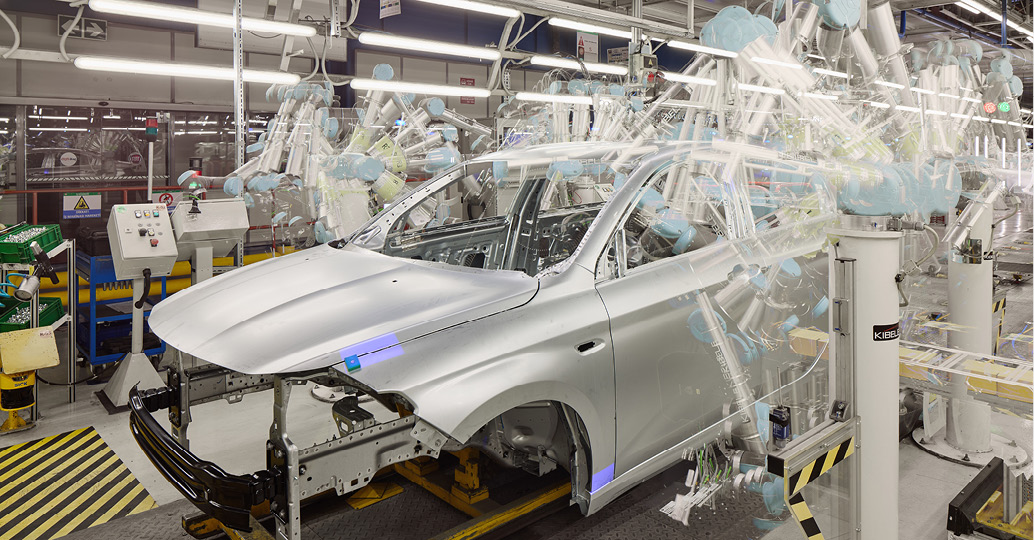
Spot Weld Wizard: Weld Parameter Traceability System
Spot Weld Wizard is a digital welding management system developed to ensure traceability of welding parameters on an individual chassis basis and to manage parameters from a central platform for robotic spot welding applications in the body shop.
Paint Booth Start Time Prediction
Artificial intelligence is used to predict the actual start-up times of different types of paint booths in the paint shop, thereby preventing energy losses arising from unnecessary queue standby time.
Smart Quota & Vehicle Allocation Project for Dealers
This project facilitates the allocation of already-manufactured and production-pipelined vehicles to dealers through a machine learning-supported automation system that is based on various parameters (dealer quota, financial standing, vehicle availability targets, etc). The goal of this project is to eliminate manual allocation processes thereby supporting sales activities.
Warranty 4.0
Warranty 4.0 is a software solution developed to enable real-time tracking of under-warranty complaints in technical services. The first of its kind in the Turkish automotive market, the software utilizes early warning systems and remote diagnostics to streamline customer complaint analysis and expedite problem-solving processes.
“Pusula” Integrated Talent Management Portal
Pusula is an integrated application that enables data-based and AI-supported management of Human Resources’ talent management processes. With Pusula, competency management, development and career planning, and human resources analytics processes are managed seamlessly. The Pusula project also serves as the systems platform of the “Reskill/Upskill” Competency Development project at Tofaş and supports the development of Tofaş employees’ technical and digital competencies.
Contactless Service
Contactless Service lets customers complete all stages of on-premises service processes from initial acceptance and courtesy vehicle allocation to additional-work approvals, delivery, and mobile-platform payments in an all-digital, contact-free manner.
Türkiye’s leading connectivity application, Fiat Connect continues to be improved in line both with changing customer needs and with advances in technology.
FIAT CONNECT
A first-in-class application developed in-house by Tofaş, Fiat Connect is a connectivity-based remote-access system that has changed the habits of owners and drivers in Türkiye by transforming how they interact with their vehicles.
Originally introduced in 2018 as both a web and a mobile-based support service, Fiat Connect involves the installation of a component that is attached to a vehicle’s electronic control unit. Once activated, Fiat Connect makes it easy for drivers to keep track and manage all the details of every aspect of their vehicle (including service history) and also to receive personalized notifications of special campaigns and reminders about scheduled maintenance.
Fiat Connect continues to be improved in line both with changing customer needs and with advances in technology. New features that were added to Fiat Connect in 2023 are highlighted below:
- Fiat introduced Türkiye’s first automotive maintenance & repair service subscription model using “smart” AI-based connected-vehicle technology. An innovative feature of this service is how it is paid for: all-inclusive authorized service is provided at a fixed monthly price for two years. The subscription fee is based on the distance (in kilometers) driven each month and is not affected by exchange rates or inflation.
- Fiat customers who use Fiat Connect can now use the app to submit requests to lease any Fiat branded vehicle on a long-term basis.
- Fiat Connect users now have immediate access to details about their vehicle’s current state of health such as battery status, tire pressure, engine oil levels, ADBLUE and DPF status, fuel quality, and fuel level/range. The system also alerts the driver if any of these readings indicate a potential issue.
- “Do & Shine “ is a gamified loyalty and engagement module introduced last year. An app-related task is assigned to the user for completion that day. Users who have completed all the tasks after a week earn the right to spin a virtual “wheel” in the app and win a guaranteed prize.
Between 2018 and 2023, Fiat Connect hastened to the assistance of drivers when they were most in need of help by proactively having ambulances dispatched on 127 occasions. Tofaş is committed to developing smart vehicles that prioritize driver safety, comfort, and environmental responsibility. In line with this commitment, Tofaş plans to add a “Safe driving habits” category to Fiat Connect by 2025 while also enlarging the application’s user base.
TALENT AND ECOSYSTEM DEVELOPMENT
Tofaş has identified two key factors underlying success in digitalization and innovation. The first is widespread adoption of digitalization and innovation culture and skillsets within the company; the second involves expanding its own ecosystem to embrace essential solution partners.
As an element of its corporate entrepreneurship approach, Tofaş regularly collaborates with Koç Group companies, NGOs, universities, incubation centers, and angel investment organizations in the conduct of programs whose aims are to enhance the customer and employee experience and to improve operational productivity.
Through Tofaş Academy, Tofaş provides technology-literacy training resources both to its employees and to its value-chain stakeholders. Such training covers basic topics like data science, business intelligence, IoT, RPA, image processing, and low code/no code.
INTRAPRENEURSHIP PROGRAMS AND INNOVATION AT TOFAŞ
Tofaş encourages employees to develop new competencies and implement their creative ideas through corporate entrepreneurship programs. By bringing together diverse teams whose members are conversant in different disciplines, Tofaş aims to foster an effective, focused, innovative, agile, and collaborative workplace environment in which value-creating work capable of shaping the future can take place.
- Tofaş’s ideation platform “Fikir Kumbarası” gives employees convenient access to intrapreneurship-program announcements and notices and can also be used by them to submit ideas for inclusion in the program.
- Through the Tofaş “Benim Projem” [My Project] program, employees are encouraged to subject ideas related to the company’s products, services, and processes. Employees are rewarded as their ideas advance through a series of stages from initial concept and investment presentations to prototyping.
- Tofaş’s kaizen-based suggestion program is designed to encourage employees to come up with innovative solutions, particularly whenever they spot an opportunity for improving production processes. Tofaş personnel who are employed in production-related functions set themselves annual suggestion-submission targets. Project owners whose ideas are trialed and deemed to be successful are rewarded.
- In 2023 Tofaş launched its “Değer Akışı Platformları” [Value Stream Platforms] program with the aim of systematically encouraging employees to come up with innovative projects in line with the company’s vision, mission, goals, and strategic priorities. This system makes it possible for Tofaş employees to develop and lead new ideas of their own and also to discover and join ongoing innovation projects compatible with their particular interests and competencies.
The plan is for some projects like these to move forward with the added support of external ecosystem collaborations in the future. To this end, Tofaş’s IT teams have designed and developed a website that will serve as a platform on which company units may announce their particular needs and external-ecosystem stakeholders such as academics, startups, NGOs etc may submit proposals in response.
- Under the Optimus initiative that was launched in 2020 to support Tofaş employees in the development of digitalization-related projects, 154 Tofaş personnel led a total of 298 projects during 2023.
- Under HackYourJob, an intrapreneurship program that Tofaş launched with the support of Koç Holding, Microsoft, and KoçSistem, Tofaş employees are encouraged to learn basic coding, to design apps of their own, and to come up with creative solutions for turning their ideas into reality. In the hackathons that are organized as part of this program, Tofaş employees receive three days of Microsoft Power platform training and compete as teams in the development of project ideas and software solutions.