CORPORATE SOCIAL RESPONSIBILITY

TOFAŞ FOCUSES ON SOCIAL RESPONSIBILITY PROJECTS THAT WILL SUPPORT SOCIAL PROGRESS THROUGH A MULTIDIMENSIONAL APPROACH, WILL CONTRIBUTE TO THE NATIONAL ECONOMY, AND WILL CREATE ADDED VALUE FOR THE COMMUNITY.
Tofaş focuses on social responsibility projects that will support social progress through a multidimensional approach, will contribute to the national economy, and will create added value for the community. Demonstrating its contributions to society on a variety of levels, Tofaş undertakes long-term projects in the areas of sport, education, and culture & art.
SPORT
Tofaş Sports Club
Backed by many years of investment in infrastructure and the infrastructure-focused team model which it has developed, the Tofaş Sports Club continues to nurture new talent for sports in Turkey.
Tofaş Gymnasium
The Tofaş Basketball team plays its home games at the Nilüfer Tofaş Gymnasium in Bursa. These well-attended encounters also contribute to the social life of Bursa’s inhabitants.
Tofaş Next Generation Project
Launched in 2016, the goals of the Tofaş Next Generation Project are to provide all children with an equal opportunity to take part in sports and to foster attitudes and points of view among children that will help them be successful in all aspects of life. The Tofaş Next Generation Project is based on a training and implementation model that focuses on the trainer-family-child triangle in order to foster a generation whose members truly believe that every child should have an equal chance to play basketball.
Since the inauguration of the Tofaş Next Generation Project, about 5,000 children have been reached through fifteen basketball schools set up in different Bursa townships. Sixteen little-league basketball teams whose members were chosen from these schools are currently undergoing training at the Mustafa V. Koç Sports Complex. A great many of the members of the Tofaş Sports Club’s little-league teams are raised by the Tofaş Next Generation Project.
In order to ensure the sustainability of these activities, 34 trainee coaches taking part in the project every week are provided with theoretical and applied coach training. Three trainers who graduated from the Tofaş Next Generation trainer project were officially taken on as coaches during 2018.
An e-learning system has also been set up in order to teach local trainers and children’s families about the project. Other project activities aimed at fostering basketball culture among the general public include street tournaments as well as sport science and creative drama workshops that are conducted with the aim of supporting children’s social intelligence development. As of end-2018, the e-learning system’s training videos had racked up about 100 thousand views by children and their trainers and families.

Mustafa V. Koç Sports Complex
The premises and facilities of the Tofaş Sports Club Mustafa V. Koç Sports Complex, which opened its doors on 9 June 2016, are available not only to Tofaş personnel but also to Bursa’s amateur sports teams and athletes. With 5,800 m2 of space, this complex contains three basketball courts, a fitness center, and a fully-equipped sports rehabilitation center capable of providing whatever forms of physical therapy athletes may require.
EDUCATION
Fiat Laboratories
Seeking to train those who are employed by the Turkish automotives industry and to equip and make them conversant with the industry’s newest technologies so that they can make use of them in the performance of their jobs, the Fiat Laboratory concept got its start as part of Koç Holding’s “Vocational Education: A Crucial Matter For The Nation” project. Collaborating with the Ministry of Education’s General Directorate of Vocational and Technical Education and working through Fiat Laboratories, Tofaş helps industrial technical training schools and institutions to improve their capacity to provide motor vehicle technology instruction. The first Fiat Laboratory, which was opened at the Şişli Industrial Vocational High School in İstanbul in 2006, celebrated its 12th year of operation in 2018.
Fiat laboratories have been set up at eleven vocational lycees in İstanbul, Bursa, Kocaeli, Ankara, Antalya, İzmir, Adana, Samsun, and Diyarbakır. Their instructors, recruited from Tofaş Academy, work together with Tofaş after-sales services regional managers as well as with local Tofaş services managers.
During 2018, service technical specialists employed by local Tofaş service providers received vehicle malfunction detection and diagnosis as well as on-the-job and social behavior skills training provided by Tofaş Academy personnel in all Fiat Laboratory schools.
As of end-2018, there were close to 2,250 people (trainers and trainees) at all Fiat Laboratories. The laboratories graduated 218 students in 2018. Under a 2017-2018 European Union project, a group of teachers and students from the Vocational and Technical Anadolu Lycee in Ankara went to Spain where they underwent training and also gained international experience. They proudly represented the Fiat brand through their efforts there.
Under the “Vocational Education: A Crucial Matter For The Nation” project, students who attend classes at Fiat Laboratories and who satisfy requirements are provided with scholarships every year by the Vehbi Koç Foundation. Such scholarships were awarded to 273 students in 2018.
Having expired in January 2018, the Fiat Laboratories agreement was renewed once again to cover the 2018-2019 academic year.
Tofaş Science High School
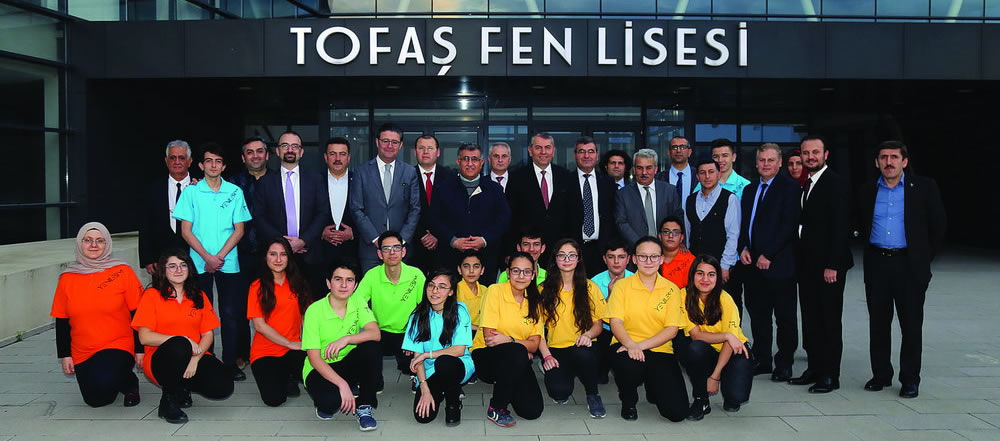
Located in the Demirtaş Organized Industrial Zone in the Özlüce district of Bursa’s Nilüfer township, instruction at Tofaş Science High School began in the 2014-2015 academic year. Occupying over 12 thousand m2 of grounds, the school has 16 classrooms, 70 dormitory rooms capable of accommodating 280 residents, and a gymnasium. There are 412 students currently enrolled at the school.
Turning out its first graduates in 2015, the Tofaş Science High School ranked first among the schools that students in Bursa most wanted to attend in the run-up to the 2017-2018 academic year and fifth in Turkey as a whole. In Turkey’s countrywide ranking of lycee students’ academic achievement, one of Tofaş Science High School’s students was in the top 20 and four of them were in the top 500.
In 2018 an “Innovation Workshop” was initiated with Tofaş support at Tofaş Science High School. The goal of this workshop is to support the instruction of well-educated young people who will shape the future of automotives and engineering in Turkey and serve as its leaders.
Having identified it as a “Project That Inspires”, the Ministry of Education has decided to expand the Innovation Workshop program to embrace all science highschools. Support continues to be provided so as to ensure the workshop’s continuity.
CULTURE & ART
Tofaş Museum of Cars and Anatolian Carriages and Tofaş Art Gallery
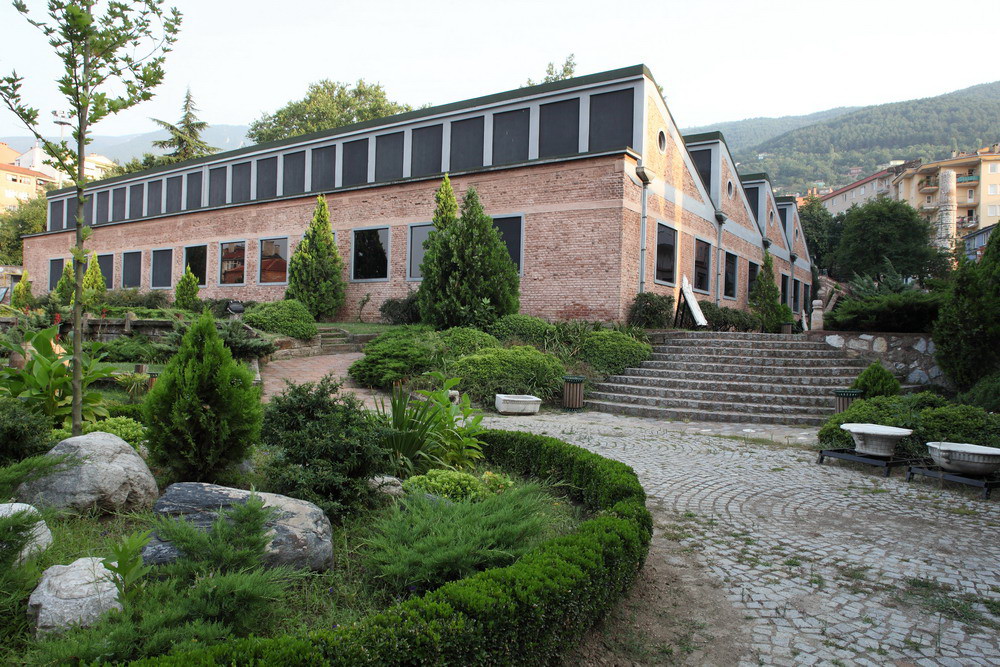
Located in Bursa’s Umurbey district, the Tofaş Museum of Cars and Anatolian Carriages is a private museum focusing on the Anatolian transport heritage. Its collection includes not only Tofaş-manufactured cars but also examples of antique carts, carriages, wagons, and other transport-related objects that make it the first and only museum of its kind in Turkey. The museum occupies the premises of what used to be a silk-weaving mill, the historic Umurbey hammam, and an old Turkish house adjacent to the latter, all of which were renovated and repurposed by Tofaş. Occupying 17 thousand m2 of grounds, the museum opened its doors in 2002 and has received about 600 thousand visitors since then.
On display at the museum is a historical panorama of the history of human transport in Anatolia beginning with a wheel that is 2,600 years old and extending to the present day with examples of Tofaş-built motor vehicles.
Located within the same grounds as the museum is the Tofaş Art Gallery housed in the Umurbey Hammam, the original construction of which dates to 1430. To date the gallery has hosted six exhibitions. “The Poise Of The Steelyard: Scales, Weights & Measuring Instruments”, a show with past and present-day examples of such equipment, attracted more than 140 thousand visitors as of end-2018.
Pamukkale Hierapolis archeological excavations
Since 2005 Tofaş has been sponsoring archaeological excavations at Hierapolis, the extensive ruins of one of the five biggest ancient cities in Turkey. Coterminous with the Pamukkale thermal zone, both Hierapolis and Pamukkale were declared UNESCO World Heritage sites in 1988. Excavation work, which is being overseen by the Ministry of Culture and Tourism and the Denizli governor’s office, continued during the 2018 season with Tofaş’s support.
The excavations are being carried out by an international team of about seventy archaeologists, architects, restorers, conservators, and other experts mainly from Italy and Turkey. One of the site’s star attractions is the Hierapolis theater. Built about 1,800 years ago, this is one of the finest examples of Roman theater architecture still in existence. Restoration work on the theater’s scaenae frons facade (the elaborate multi-story background of the proscenium) has been completed making this the only ancient theater in Turkey to have a fully-reconstructed and functioning stage. As a result of this work, this 12 thousand-seat theater is now being used again as a venue for cultural and artistic activities as it was originally intended.
Among the other significant Hierapolitan remains that have been unearthed are two necropolises, baths, a basilica, a martyrium, the Frontinus Gate, a gymnasium, an Apollo temple, and the so-called Pluto’s Gate (Plutonium), a shrine sacred to the ancient god of the underworld, Pluto.
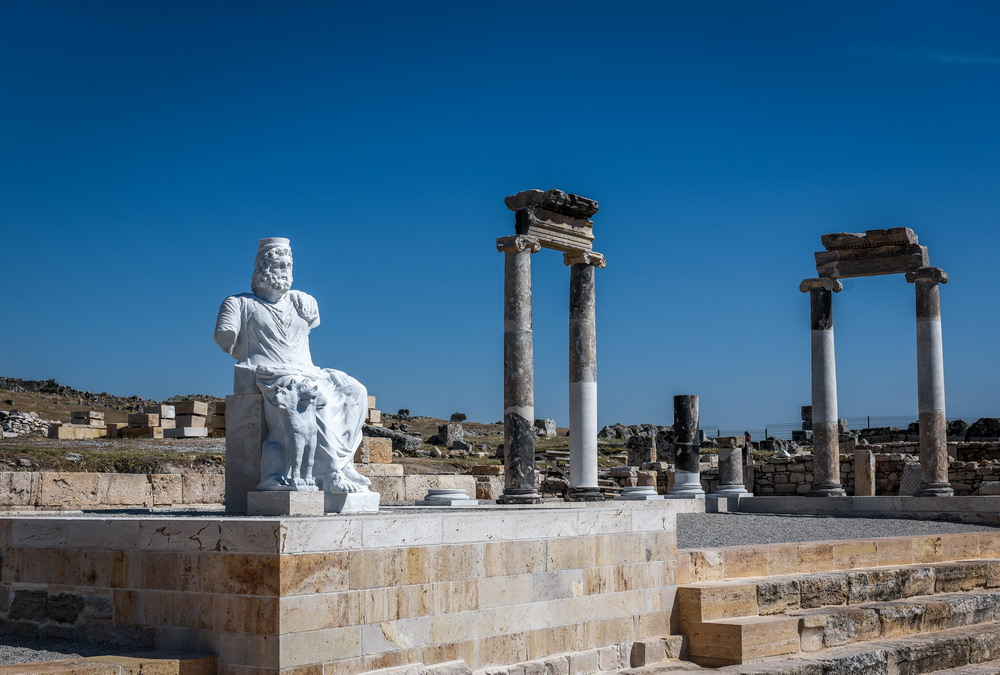
During the last two years, Tofaş’s support for the Hierapolis excavations has been focusing on the unearthing and restoration of the Ploutonion sacred precinct and making of a replica of a statue of Hades that is known to have existed there in ancient times. Both of these were opened to visitors in 2018. The most recent excavations at the Ploutonion sacred precinct have turned up finds that push Hierapolis’s known history back another three centuries.