SUPPLY CHAIN MANAGEMENT
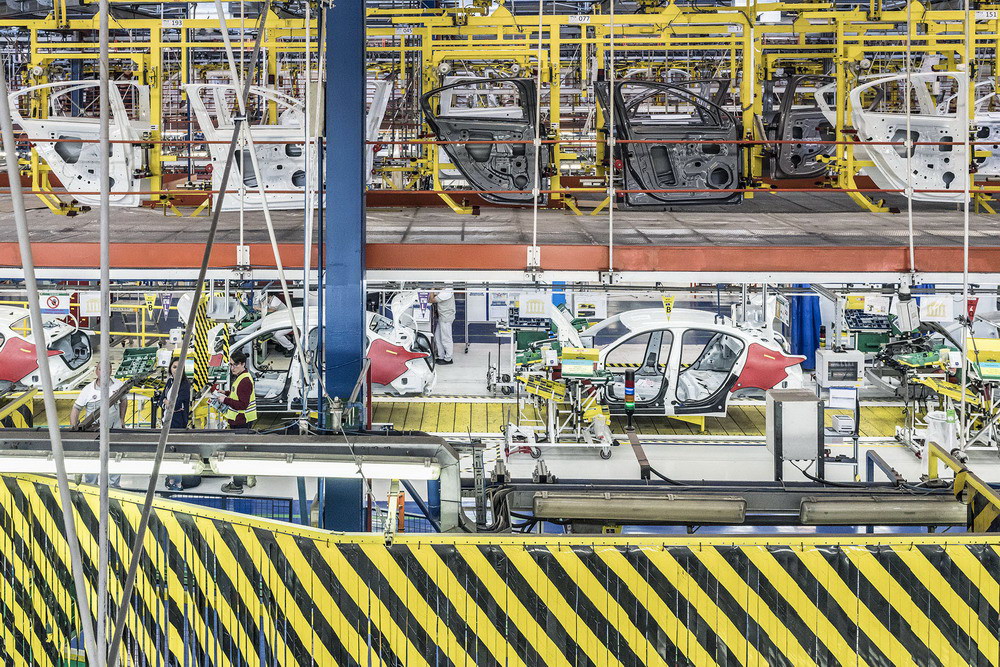
TOFAŞ BELIEVES THAT FORMING A CONTINUAL DEVELOPMENT-ORIENTED SUPPLY CHAIN THAT ADOPTS BUSINESS ETHICS AND NORMS SYNONYMOUS WITH ITSELF IS ONE OF THE TENETS OF THE SUSTAINABILITY OF ITS SUCCESS.
In the conduct of its supply chain management operations, Tofaş seeks to safeguard its competitive strength, to reduce its production and procurement costs, to achieve the best possible quality and delivery performance in goods and services procurements, and to ensure the sustainability of all of these processes.
In line with these aims and recognizing that suppliers and their personnel are among the most important elements of its value-creation chain, Tofaş helps its suppliers constantly develop their capabilities, achieve organizational excellence, and enhance their business success and productivity.
Tofaş’s procurements fall under three main headings defined as: Direct Materials, Spare Parts, Services & Industrial Procurement. In 2019 Tofaş’s total procurements budget amounted to EUR 3.4 billion in value. The company purchases its direct materials from 149 suppliers located in 14 cities around the country.
CONTRIBUTING TO THE GROWTH AND DEVELOPMENT OF DOMESTIC SUBMANUFACTURING
Since the day it was founded, Tofaş has given great importance to localizing its procurements and reducing its dependence on imports by contributing substantially to the development of a home-grown automotives submanufacturing sector. Tofaş today procures an average of 75% of its components other than engines and transmissions from domestic suppliers.
Having made reducing its dependency on non-domestic sources and increasing localized content two of its medium- and long-term strategies, Tofaş works with suppliers especially to localize the production and procurement of electrical, electronic, and mechatronic components. Such efforts not only contribute to Tofaş’s own development but also support suppliers (whom Tofaş recognizes as its business partners) in their efforts to compete and succeed at the global level.
Among the many components that Tofaş procures locally, the most important are preformed sheet metal components, machined forged and cast components, mechanical and electromechanical components, electrical system elements, molded and extruded plastic and rubber components, seats, door panels, windshields and windows, dashboards, bumpers, exhaust system components, chemicals, interior and exterior trim components, and fasteners.
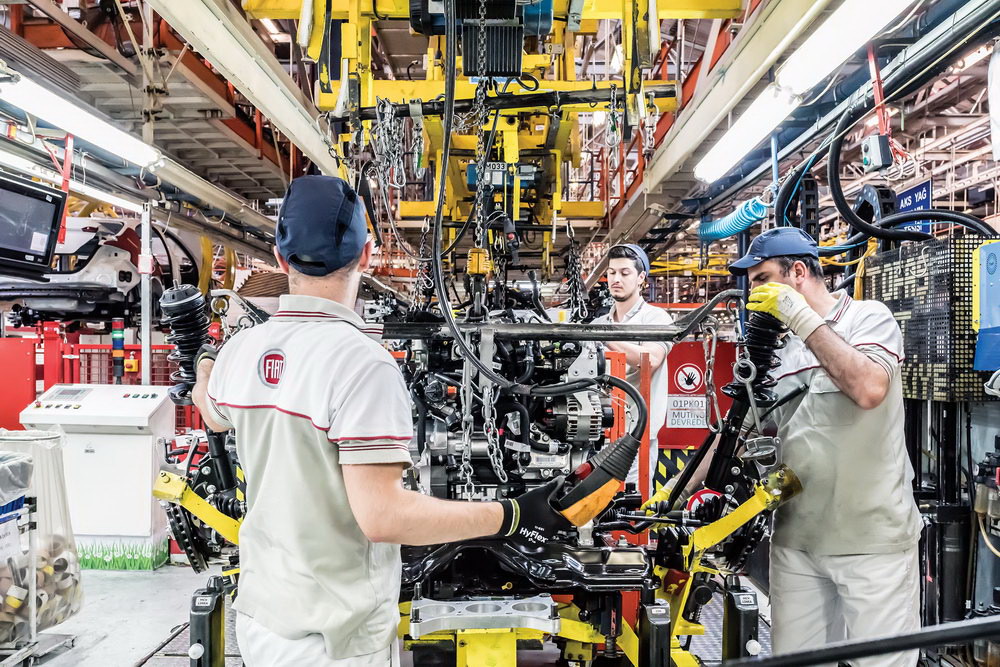
IMPROVEMENTS IN PROCUREMENT PROCESSES
In the conduct of all of its procurement processes, Tofaş ensures that its relationships with suppliers are transparent, mutually trust-based, and competitively sustainable within the overall framework of a long-term business relationship.
Whenever Tofaş considers the procurements aspects of its new projects, it gives particular attention to acquiring the latest technological abilities for the Turkish automotive industry on the one hand and to boosting its own competitive strength on the other. In line with this, Tofaş encourages international firms that are global manufacturers of automotive components to invest in Turkey or to enter into joint ventures with local suppliers.
While taking measures to reduce its actual procurement costs, Tofaş also engages in an ongoing effort to streamline its business processes through the use of advanced procurement methods and digitalization.
SUPPLIER SELECTION
While Tofaş selects those who will be supplying inputs for its assembly-line operations based on their access to submanufacturing capacity, there are certain basic criteria that it expects every potential supplier to satisfy.
Specifically all suppliers must:
- Possess both the technical (quality/cost competitiveness, delivery performance, project management, production capacity, co-design) and the organizational competencies capable of satisfying the automotive industry’s expectations;
- Be financially robust;
- Hold ISO/TS 16949 (quality) and ISO 14001 (environment) certifications;
- Possess advanced design, manufacturing, and testing competencies;
- Have successfully passed Tofaş-conducted Supplier Eligibility Assessment and Process Audit inspections;
- Be able to contribute favorably to Tofaş’s own competitiveness by supporting improvements in its quality and cost-effectiveness;
- Have demonstrated an ability to consistently improve themselves and increase their competitive strength by keeping a close watch on what its domestic and international competitors do;
- Demonstrate a willingness and an ability to engage in a transparent and mutual-trust-based business-partner relationship in their dealings with Tofaş.

SUPPLIER DEVELOPMENT
In the conduct of all of its procurements operations, Tofaş focuses on establishing and maintaining business-partner relationships while making efforts to help its suppliers to enhance their performance in many different areas such as product design, organizational and technical improvements, quality, cost-improvement, physical and financial risk mitigation, manufacturing process improvement, collective procurement, and sustainability.
In the conduct of its supplier development activities, Tofaş’s primary goal is to create a proactive and autonomous procurements process that completely replaces previously-existing ways of doing business that are merely reactive and focused on “problem-fixing”.
During the year, Tofaş organizes a variety of special training and other activities for its suppliers in order to share its own technical knowledge and experience with them and to support suppliers’ efforts to improve and perfect their own human resources, management, and production processes.